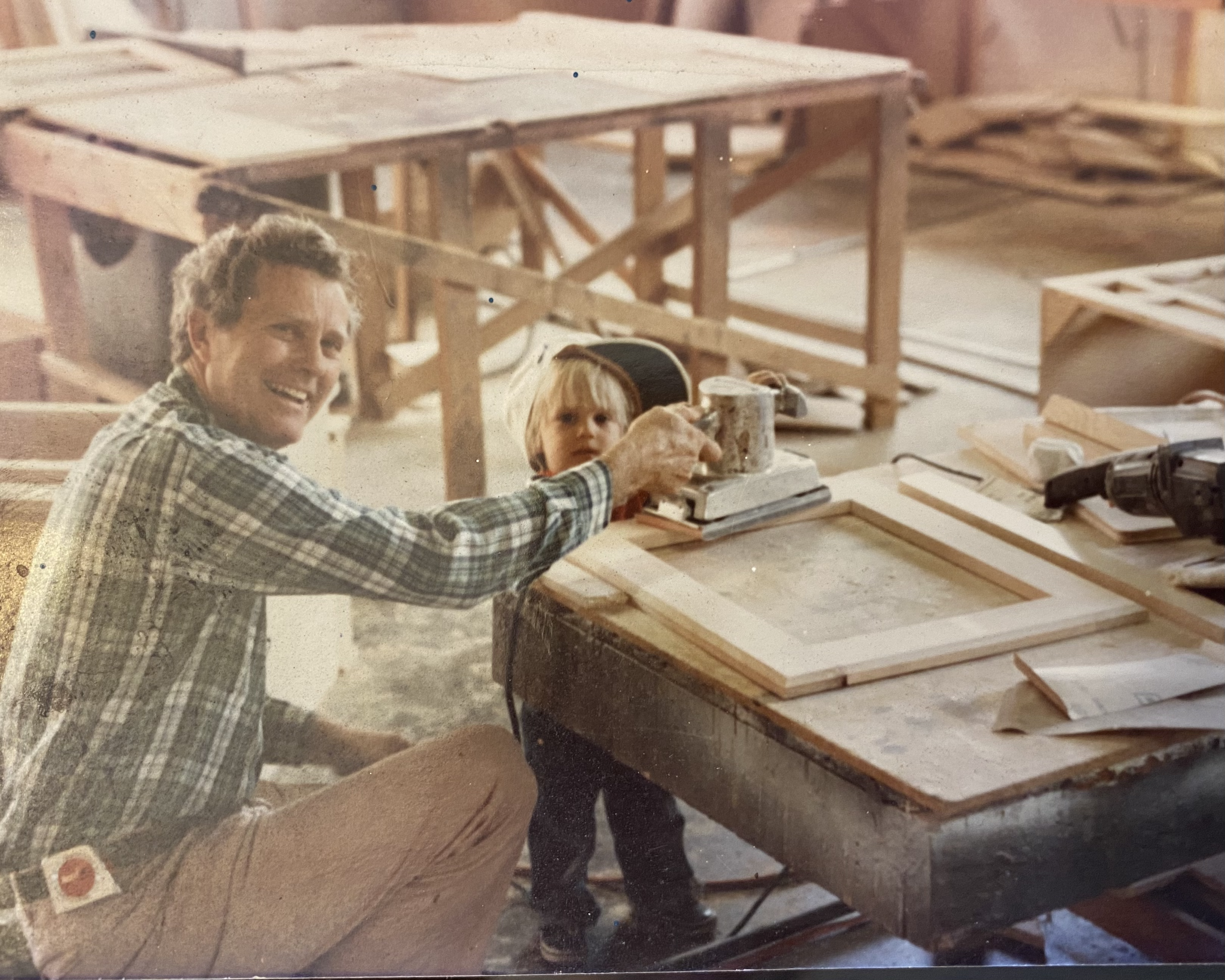
It started long before I picked up a tape measure.
I spent my career in digital product design. UX, product strategy, eventually VP of Product Design and Innovation at a major US digital agency. A long way from a table saw, at least on paper.
When I left that role, I did what felt natural. I picked up the family trade. Started taking on custom cabinet clients. And immediately ran face-first into the same problem every small shop builder knows.
Clunky software. Costly barriers. A gap nobody filled.
Cabinet design software has been around for decades. Tools like SketchUp, Mozaik, and CabinetPro are capable. But the barriers to using them are significant — high annual costs, steep learning curves, and workflows that require you to model an entire kitchen before they will validate a single dimension.
For a one-man shop, that math does not work. Not the software math. The business math. The cost and time required to get useful output from those tools is hard to justify when you are trying to stay profitable on every job.
And for the next generation of builders who grew up expecting software to be intuitive, those tools are a dealbreaker before the trial even ends.
A spreadsheet that got out of hand.
I started where most builders start — a spreadsheet. Doors first, then drawer math. I kept adding to it. Overlay calculations, face frame dimensions, dado depth. It kept getting more capable. More reliable. More honest.
At some point it crossed a line. It was no longer a spreadsheet. It was spitting out complete part measurements from finished cabinet sizes, raw material totals, custom cut lists. Jobs I used to spend an hour calculating were taking minutes.
That is when it became obvious. If this was helping me, it would help others. And if I was going to build it for others, I was going to build it right.
I had spent two decades making digital products intuitive for people who did not want to think about software. That background is why CabinetCalc works the way it does. The math is serious. The interface does not have to be.
This is not a tool built by someone who heard about cabinet making. It was built by someone who learned it from his father, who learned it from his, standing in a shop in Kansas City with sawdust on everything.
That context matters. Because the product reflects it in every decision — what gets included, what gets left out, and what it feels like to use it at the end of a long day on the shop floor.